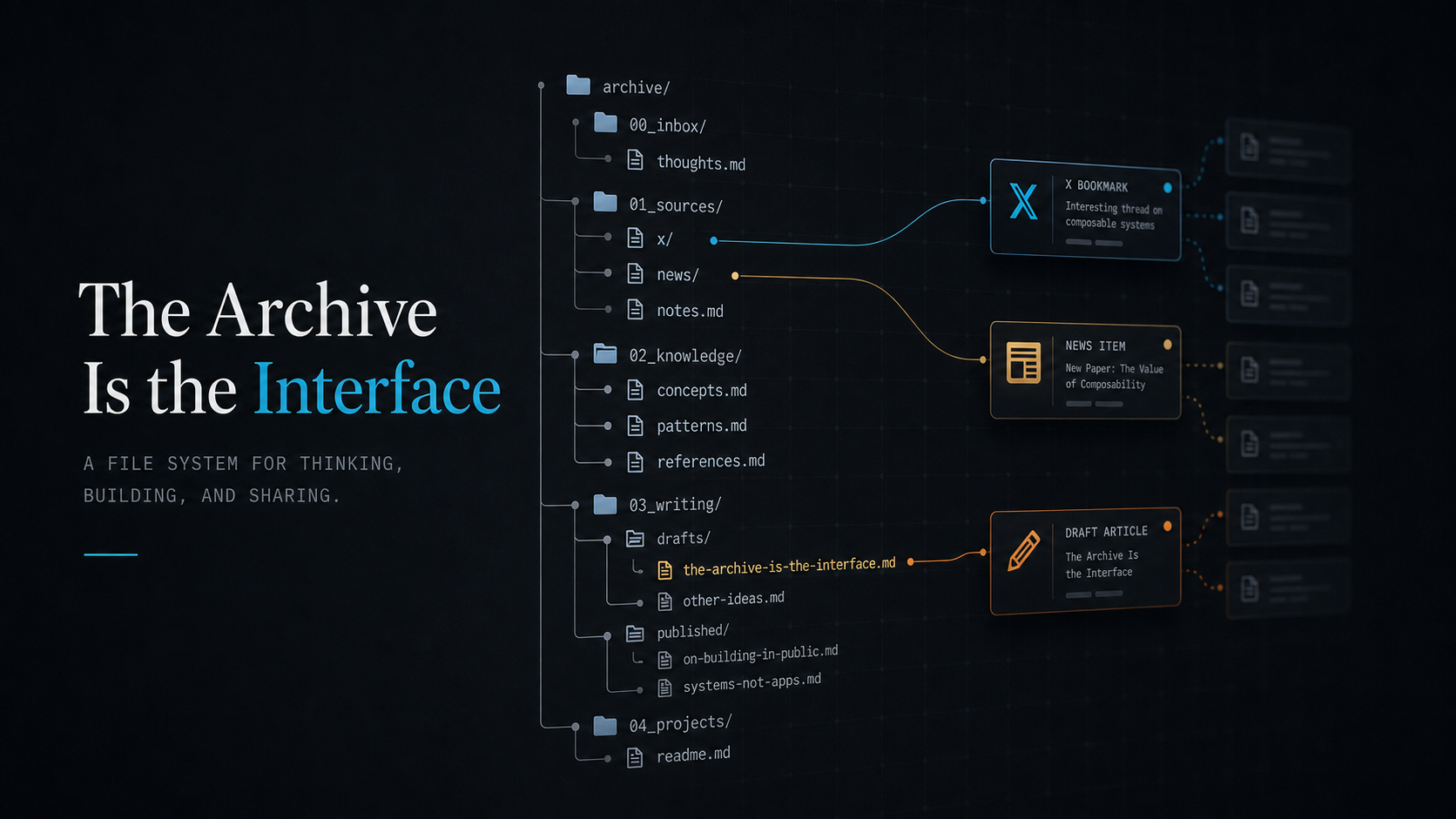
The weak version of RAG retrieves facts. The strong version gives an agent a place to move.
That distinction matters more than it sounds. If all of the memory lives inside a vector index, the agent gets a search box with a memory palace hidden behind it. It can ask for nearby chunks, but it cannot easily browse the shape of the archive, compare adjacent evidence, inspect what was skipped, or follow a trail from a saved post into the links, threads, and context around it.
A filesystem changes the interface. One canonical capture can live under a date path, while generated views expose the same material by topic, author, tag, and project. The source of truth stays singular, but the archive becomes navigable from more than one angle. That is closer to how useful research actually happens: start with a signal, open the surrounding folder, follow the links, then decide whether there is a claim worth writing.
This is why the bookmark pipeline should not stop at “embed everything.” The useful object is a small public-safe document with a stable id, source links, extracted links, thread context when available, tags, and enough plain-language summary for an agent to decide where to go next. Embeddings can sit beside that. They should not replace it.
The current wave of agent infrastructure points in the same direction. Background tasks, remote tool calls, and scheduled assistants are becoming normal. But the local archive still needs to own the evidence. A scheduled task can remind you to review the morning report; the repo should generate the report, keep the provenance, and produce the draft.
The practical architecture is simple: capture bookmarks into Markdown, build virtual category views over them, pull in a few fresh public hooks, and ask for one editorial decision each morning. The human picks the angle. The system turns it into a short post, an X version, and a publishable artifact with links still attached.
Agentic RAG starts to work when the agent can stop guessing what the archive contains and start walking through it.